Delwin Carter, Ph. D.
Quantitative Methodologist
Mixture modeling • longitudinal analysis • simulation studies • reproducible research
Biography
Delwin Carter, Ph.D.
Delwin Carter is a quantitative research methodologist specializing in mixture modeling and longitudinal latent variable analysis. His work focuses on the development, evaluation, and application of statistical models designed to capture heterogeneity and change in complex behavioral and developmental data. Through methodological research and simulation studies, his work examines how statistical modeling decisions influence the reliability and interpretation of substantive research findings.
His research focuses in particular on longitudinal mixture models, including latent class and latent transition analysis. Using large-scale Monte Carlo simulation studies, his work evaluates how model specification, sample size, and measurement conditions influence estimation accuracy, classification quality, and the stability of substantive conclusions drawn from complex statistical models.
This line of research aims to clarify the conditions under which advanced statistical models perform reliably and to provide practical guidance for researchers applying mixture modeling techniques in psychological, educational, and developmental research. His work integrates statistical theory, computational simulation, and applied research questions in order to improve both the methodological foundations and practical use of complex latent variable models.
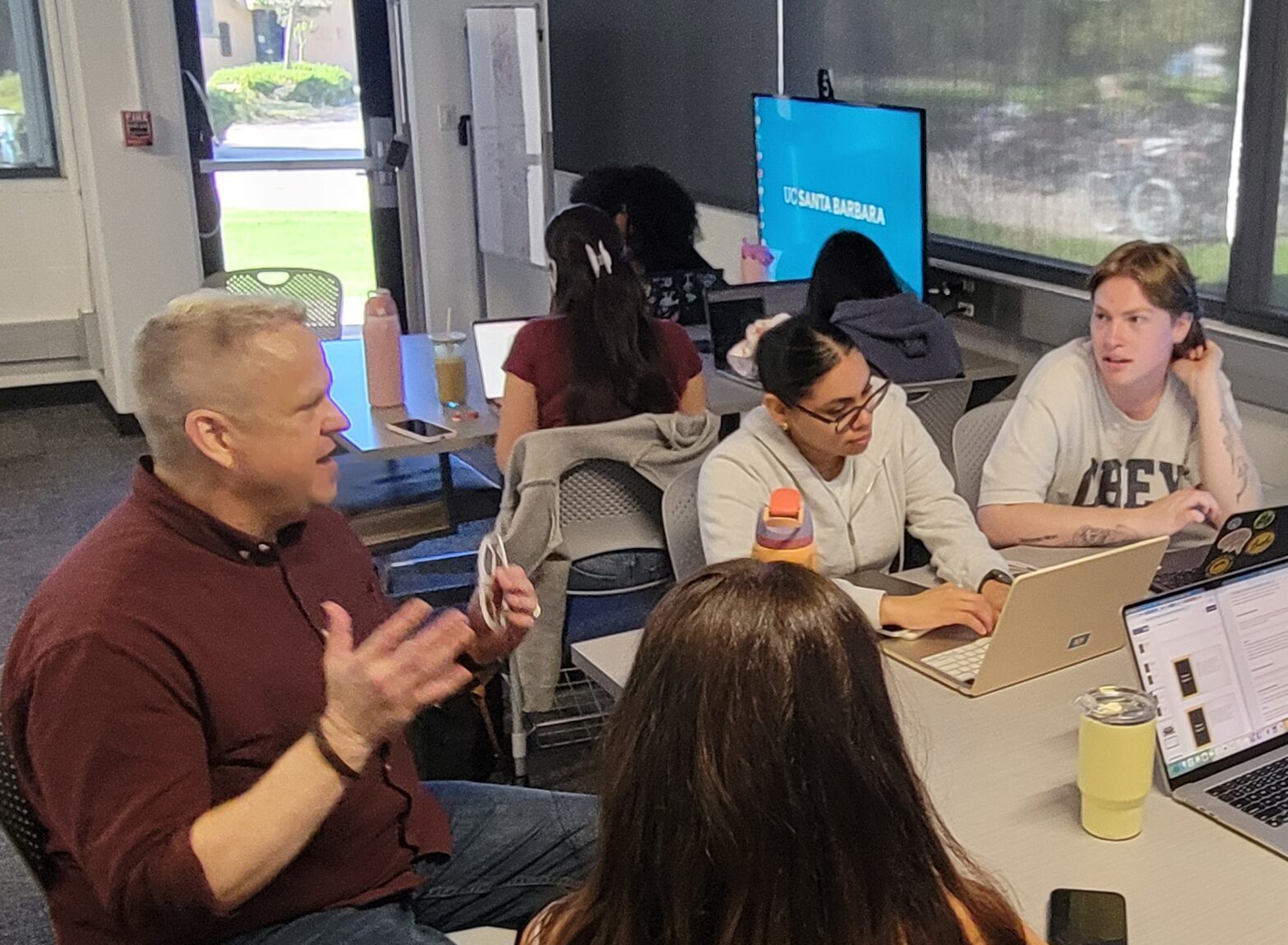
Delwin teaches research methods and quantitative analysis at the University of California, Santa Barbara. His courses emphasize methodological reasoning, model interpretation, and reproducible research practices, helping students move beyond mechanical use of statistical software toward a deeper understanding of statistical inference and research design. He also directs The MIX Institute, a research and training initiative focused on mixture modeling, collaborative quantitative research, and advanced methodological training.

APPROACH
Approach to Quantitative Methodology
Delwin’s approach to quantitative methodology is shaped by the belief that statistical rigor and accessibility are not opposing goals. Early challenges learning statistics led him to view quantitative difficulty not as a barrier, but as a signal that complex ideas require clearer conceptual organization. This perspective continues to inform both his methodological research and his teaching of advanced statistical methods.
Across his work, he focuses on organizing complex statistical reasoning in ways that preserve theoretical rigor while improving interpretability and transparency for applied researchers. His teaching and mentoring also draw on principles of relational calibration, an approach he has developed to help students progressively align conceptual understanding, statistical reasoning, and applied research practice as they learn advanced quantitative methods.